
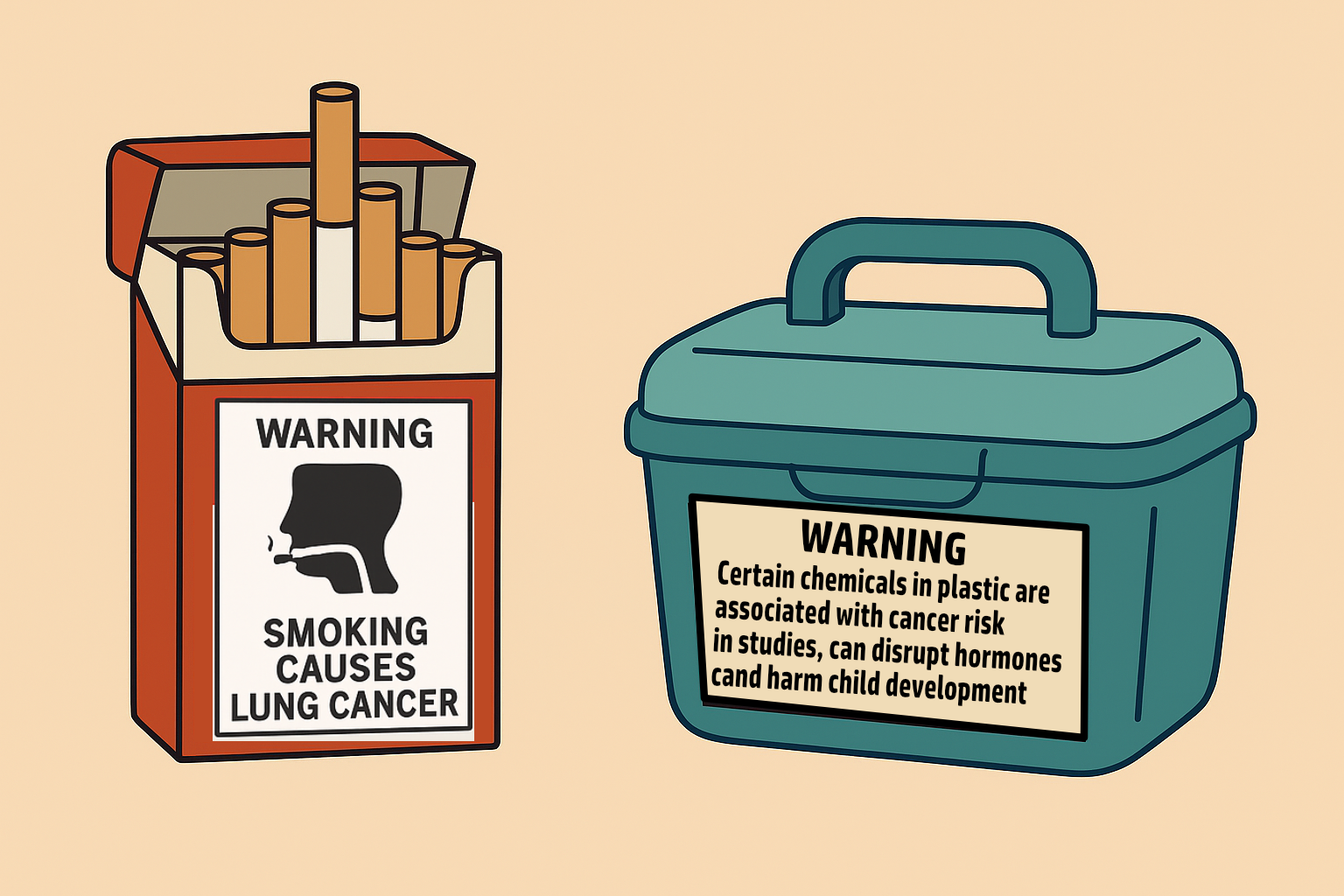
Why Plastic Tiffins Should Carry a Health Warning
1. Plastic Tiffins Are Food-Contact Materials — Yet Poorly Regulated
Plastic containers directly contact food every day — often hot, oily, or acidic food that increases chemical migration. Most tiffins sold in India are made from polypropylene (PP), LDPE, or mixed plastics, and are rarely tested batch-wise for migration limits or chemical additives. Warnings remind parents and schools that “plastic-safe” is not the same as “food-safe.”
2. They Leach Chemicals Linked to Serious Health Risks
When heated or scratched, many plastics release chemicals such as:
- Bisphenol A (BPA) – linked to breast and prostate cancers, early puberty, and diabetes.
- Phthalates – known endocrine disruptors that interfere with hormonal development.
- Styrene, melamine, and additives – can migrate into food under normal use.
Even BPA-free plastics often contain similar substitutes (BPS, BPF) with comparable toxicity.
3. Children Are Especially Vulnerable
- Children eat more food per kilogram of body weight, so exposure per meal is higher.
- Their organs and endocrine systems are still developing.
- Early exposure to hormone-disrupting chemicals can cause lifelong health impacts — affecting growth, fertility, immunity, and neurodevelopment.
Warnings serve as a public health nudge for parents and schools to choose safer alternatives.
4. The Problem Continues After Disposal
A tiffin’s story doesn’t end in the lunchbox. When discarded, it degrades into microplastics — contaminating soil, air, and water. These microplastics re-enter the food chain — meaning the same child exposed today through lunch could be exposed again tomorrow through food or water. A life-cycle warning captures this broader hazard.
5. Precedent Exists — Cigarette, Lead Paint, and Food Warnings
Public health history shows that label warnings work. Cigarette warnings didn’t ban smoking — they informed choice and drove gradual change. Similarly, food and toy safety warnings helped eliminate lead and unsafe additives. A simple, visible label on school-use plastic tiffins can do the same — encourage safer markets without banning products outright.
6. A Proactive, Low-Cost Policy Tool
Unlike bans or product recalls, a warning label is inexpensive and non-disruptive. It empowers parents and schools, creates market demand for safer alternatives, and nudges manufacturers toward safer materials. In short, it’s the most cost-effective child health protection measure available.
7. The Message Should Be Clear and Caring
⚠️ “Plastic tiffins may release chemicals and microplastics, especially with hot or oily food. Choose steel or glass — safer for your child, safer for the planet.”