
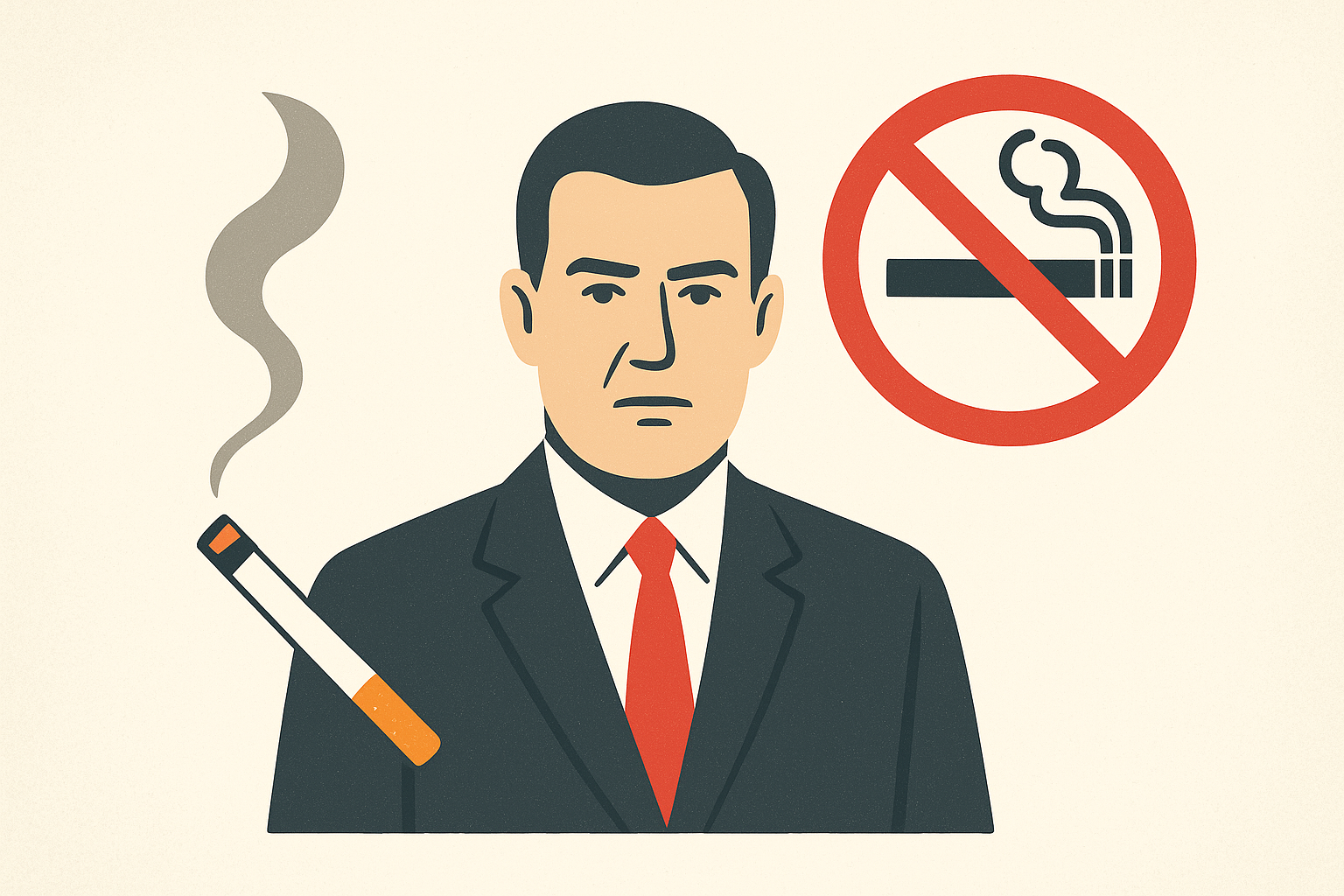
How Bloomberg Made NYC Smoke-Free: A Policy Breakthrough Discover how Mayor Bloomberg transformed New York City with a bold, evidence-driven smoking ban—an iconic case of successful public health policy.
New York City Before the Bloomberg Smoking Ban: A Snapshot of a Smoky Era
Before New York City became a global model for smoke-free public policy, it was a very different place—thick with cigarette haze, overflowing ashtrays, and suffused with a cultural acceptance of smoking that now feels almost unimaginable.
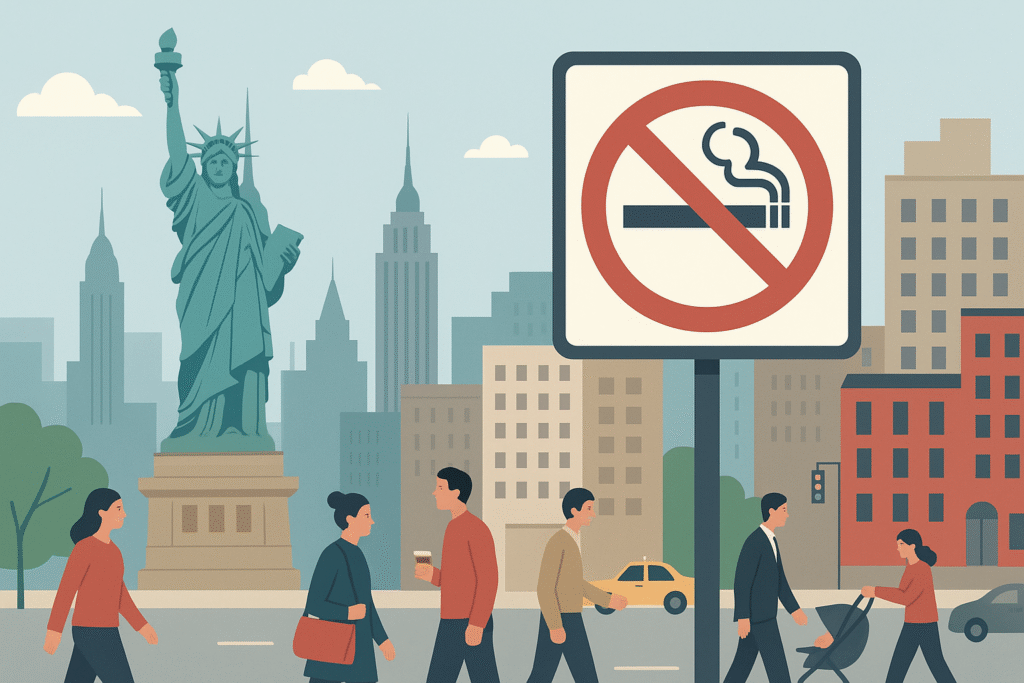
A City Where Smoking Was Everywhere
In the 1990s and early 2000s, smoking was woven into the social and physical fabric of NYC. Cigarette smoke was unavoidable in:
- Restaurants and cafés
Most dining spaces allowed smoking, and many had “smoking sections” that offered little real separation. Non-smokers routinely ate in air hazy with secondhand smoke. - Bars, nightclubs, and lounges
These were the heavy-smoking zones of the city. Workers in nightlife venues inhaled more smoke during a shift than many smokers did in a day. - Offices and workplaces
Earlier laws restricted workplace smoking, but enforcement was weak and exceptions were abundant. Many office buildings still had smoking rooms—or tolerated smoking at desks after hours. - Taxis and public transit stations
While officially prohibited, smoking in taxis, station entrances, and enclosed transit areas wasn’t uncommon.
New York City’s air—indoors and outdoors—was marked by the ubiquity of cigarettes.
Rising Public Health Concerns
By the time Bloomberg took office in 2002, NYC faced alarming public health statistics:
- Nearly 1 in 5 adult New Yorkers smoked.
- Over 10,000 deaths per year were attributable to smoking-related illnesses.
- Hospitality workers suffered extremely high exposure to secondhand smoke, leading to respiratory issues, cardiovascular risks, and chronic bronchitis.
- Secondhand smoke caused an estimated 1,000+ premature deaths annually in New York State.
Doctors, public health experts, and advocacy groups were calling the situation a silent crisis—especially for workers who had no choice but to inhale smoke every day.
Strong Tobacco Industry Influence
Tobacco companies still held significant sway:
- They funded legal campaigns arguing that smoking bans would destroy restaurant and bar revenue.
- They promoted “compromise solutions” like better ventilation—despite evidence these systems did not protect health.
- They positioned smoking as a cultural, personal-freedom issue in NYC’s diverse population.
This influence created political hesitation. Many policymakers feared backlash if they supported strong restrictions.
Business Owners Were Deeply Divided
Before the ban, the restaurant and nightlife sector mounted intense resistance. Their concerns included:
- Bars losing customers who wanted to smoke socially.
- Fear of business shifting to neighboring cities or New Jersey.
- Reduced tourism appeal for nightlife.
Some owner groups predicted a “collapse” of NYC’s iconic bar culture. Many publicly opposed any form of indoor smoking prohibition.
Cultural Attachment to Smoking
New York had a longstanding cultural image of smoking as part of its identity:
- Artists, musicians, and writers smoked in cafés and lofts.
- Wall Street culture included cigarette breaks and bar meetings.
- Nightlife revolved around smoky clubs, jazz bars, and lounges.
Even media—from films to magazines—portrayed NYC smoking as stylish and quintessentially urban.
This cultural weight made policy intervention extremely controversial.
Patchwork Regulations & Weak Enforcement
Prior to Bloomberg, NYC had partial smoking restrictions, but they were:
- Inconsistent
- Poorly enforced
- Full of exemptions for bars, private clubs, and certain restaurants
The result was a confusing landscape where smoke drifted across supposed “barriers,” and real protection was nonexistent.
A City Ready for a Change—But Not Yet Convinced
Despite the resistance, public sentiment was slowly shifting:
- Parents were increasingly concerned about children’s exposure.
- Growing awareness of secondhand smoke dangers.
- Support from doctors, universities, and public health campaigns.
- A national trend toward recognizing smoking as a major environmental health hazard.
Still, passing a comprehensive ban would require political will, strategic messaging, and a strong data-driven framework—something that had not existed before Bloomberg.
The Stage Before the Transformation
When Bloomberg began pushing for a comprehensive smoking ban in 2002, he entered a city struggling with:
- Pollution-like levels of indoor smoke
- High tobacco-related mortality
- Business fears and political pushback
- Deep cultural connection to smoking
- A powerful tobacco lobby
The success of New York’s Smoke-Free Air Act of 2003 would not only transform the city’s health landscape—it would set a global precedent for urban public health policy.
He reframed the issue — from “smokers’ rights” to “workers’ health”
Before Bloomberg, the debate was framed around:
- personal freedom
- government overreach
- bar culture
Bloomberg changed the frame to:
👉 “Bartenders and restaurant staff are forced to inhale toxic smoke every day.”
👉 “This is an occupational health issue.”
This reframing:
- converted opponents into supporters
- made the press focus on health, not liberty
- made resistance look unethical
- neutralized the “it’s my body” argument
This was the most powerful tactic.
He built a coalition BEFORE announcing the policy
Bloomberg quietly met:
- labor unions
- restaurant workers
- doctors and nurses
- hospitals
- cancer societies
- environmental groups
- bar owners
- community leaders
He made them sign on privately first.
So when he announced the policy:
- he already had a WALL of supporters
- opposition looked isolated
- public opinion shifted instantly
This technique is called:
✔ “Pre-emptive consensus building”
It is rarely done in India — but extremely powerful.
He used data and health evidence ruthlessly
Bloomberg’s team compiled:
- studies on second-hand smoke
- risk of lung cancer in hospitality workers
- costs to the healthcare system
- survey data showing majority support
Every press conference had numbers, not opinions.
The public may fight ideology —
but they don’t fight clear evidence.
He used “policy entrepreneurship” — find the window + seize it
He waited for a political moment when:
- NYC economy was recovering post-9/11
- people cared more about health
- the City Council was favorable
He didn’t force the timing —
he used the window when it opened.
This is classic Kingdon’s Multiple Streams Theory in action:
- Problem stream: smoking harms
- Policy stream: viable ban
- Political stream: supportive environment
When they aligned → he acted.
He made enforcement EASY
Bloomberg designed the rule so:
- restaurants self-regulate
- no complicated inspections
- no disputes about “smoking zones”
- violations were simple to check
The rule was binary:
👉 If anyone lights up inside → violation.
This made enforcement almost automatic.
Good policy uses:
✔ simple rules
✔ visible compliance
✔ minimal bureaucracy
He prepared for backlash in advance
He didn’t fear criticism. He anticipated it.
When bar owners said:
“Customers will stop coming!”
Bloomberg was ready with:
- international data from Ireland, California
- economic studies showing no revenue loss
- statements from economists
Every argument had an evidence-based counter-argument ready to go.
He made it part of his identity
Bloomberg didn’t say:
“I am passing a law.”
He said:
👉 “I am a health mayor.”
👉 “My job is to save lives.”
He framed it as:
- leadership
- legacy
- responsibility
This created political capital.
After passing the law, he doubled down
After the law came into force:
- he increased enforcement temporarily
- published air quality improvements
- showed economic stability
- celebrated restaurant workers
This made the rule irreversible.
Even opponents accepted it after seeing the benefits.
Summary: Bloomberg’s “Impossible Policy Playbook”
This is the formula he used:
✔ Reframe the issue to a moral/health issue
✔ Build the coalition before the announcement
✔ Bring overwhelming data
✔ Use a political window
✔ Make enforcement simple
✔ Prepare for backlash with evidence
✔ Own the narrative
✔ Show success quickly
This is exactly how difficult public-interest policies succeed.